
How to Search Eaton County Court Records
Eaton County sends the public to a county Public Case Search page that routes into Michigan's statewide MiCOURT system. The county does not run its own case database. Instead, the gateway links to the circuit, district, and probate searches, and each one opens the same MiCOURT engine after a terms screen. Because results are court based rather than merged into one countywide list, the first real step is choosing the court that holds the case you want.
Before you begin, gather what you know. A case number gives the fastest match, but a full name works when you do not have the number. Party name, a date range, and the case type all help narrow a common name. The public search is free, needs JavaScript turned on, and asks you to accept the terms before any case list appears.
The county case-search gateway lives on the Eaton County Public Case Search page, which feeds the statewide MiCOURT case-search application. The developer documentation behind the portal shows the full set of filters it supports.
The MiCOURT developer docs describe how the search engine is built and what data each query can return.
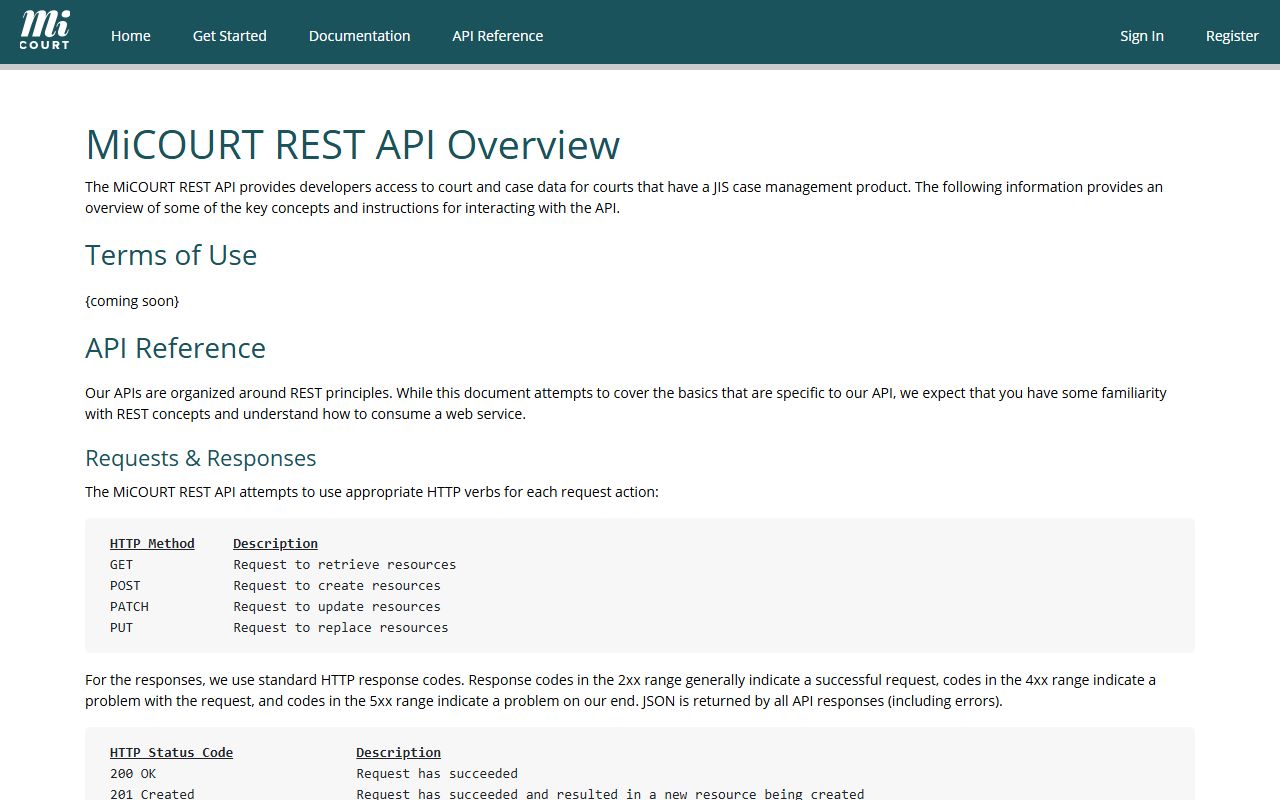
That reference confirms the county gateway is only a doorway. The actual query, filters, and results all run inside MiCOURT once you pick a court and accept the terms.
- Open the county Public Case Search page and read the short routing notes.
- Pick the court that fits your case: circuit, district, or probate.
- Accept the MiCOURT terms screen to move into the search application.
- Search by case number if you have it, or by last name and first name if you do not.
- Narrow results with filters such as case type, judge, status, or a date range.
- Open the matching result and review the parties, hearing dates, docket, and case status.
- If probate money totals or balances look off, call the probate court rather than trusting the search figure.
Eaton County Court Records Search Fields
The public front end shows a small set of boxes, but the search engine behind it supports far more. The MiCOURT case-search documentation lists the filters an operator can apply, from basic name and case number lookups to date ranges tied to filing, offense, and disposition. Every field is optional, so you can start broad and tighten the results as needed. The table below lays out the fields the docs expose.
The full field list comes from the MiCOURT case-search documentation, which maps each filter and sort option the portal accepts.
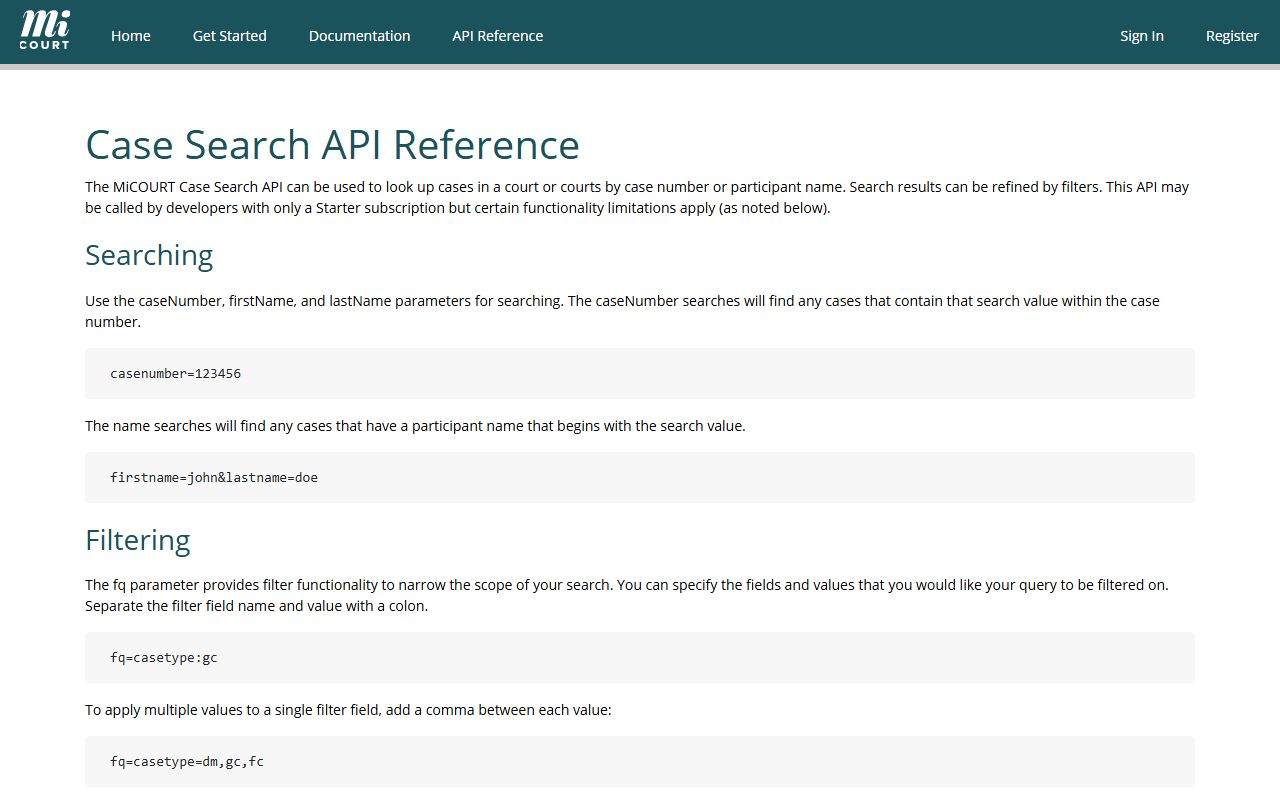
Those filters explain why a single common name can be narrowed to one case with a case type, a judge, or a filing-date window.
| Field Label | Type | Required | Notes / Format |
|---|---|---|---|
| Case Number | Text | No | Search by docket or case number. |
| First Name | Text | No | Party search. |
| Last Name | Text | No | Party search. |
| Case Type | Dropdown | No | Court-specific case type filter. |
| Case Type Category | Dropdown | No | Adoption, appeals, civil, criminal, domestic, juvenile, non-traffic, probate, traffic. |
| Case Status | Dropdown | No | ADR, closed, deferred, disposed, mediation, open. |
| Case Public Status | Dropdown | No | Public or suppressed. |
| Judge | Dropdown | No | Judge filter. |
| DOB | Date | No | Date of birth filter. |
| File Date From / To | Date | No | Date range. |
| Offense Date From / To | Date | No | Date range. |
| Disposition Date From / To | Date | No | Date range. |
| DLN + DLN State | Text / Dropdown | No | Driver license number and issuing state. |
| VPN + VPN State | Text / Dropdown | No | Vehicle plate number and issuing state. |
Types of Eaton County Court Records
The county record set is best read by court level and subject. The 56th Circuit Court is the general-jurisdiction trial court, so its files hold felonies, larger civil suits, and domestic relations cases such as divorce, custody, and support. The 56A District Court is the limited-jurisdiction court, so its files hold misdemeanors, traffic cases, civil infractions, small claims, landlord-tenant matters, and lower-dollar civil suits. The Eaton County Probate Court keeps a separate track for estates and guardianship-style matters. The public case search and the request forms are built around that split, not around one merged county file.
Knowing the division tells you which clerk has the file and which portal to open. District civil cases run through MiFILE e-filing, and attorneys must file electronically, so those records include both counter paper and electronic access. Live dockets and hearing dates are easiest to follow through the county Eaton County court dockets once you know the case number.
- Civil: contract disputes, personal injury, property cases, civil judgments, and small claims in district court.
- Criminal: misdemeanors and preliminary exams in district court, felonies in circuit court after bindover.
- Traffic: tickets, civil infractions, payments, and dismissible or waivable violations in district court.
- Family: divorce, custody, support, and domestic relations cases in circuit court.
- Probate: wills, estates, trusts, guardianships, conservatorships, name changes, and emancipation.
- Juvenile: a restricted category that is not searchable like adult cases.
What Eaton County Court Records Show
A case pulled through MiCOURT is built around case-level data, a docket, and public-access limits. The visible fields a reader looks for are the case number, court and division, judge, case type, filing date, case status, parties, hearing dates, and the docket entries themselves. Criminal and traffic files can also carry offense dates, disposition dates, and driver or vehicle identifiers because those cases link to charges and later consequences. The table below shows the fields most searches return.
| Field | What It Shows |
|---|---|
| Case Number | The docket or tracking number that identifies the file and its filing year. |
| Court and Division | Whether the case sits in circuit, district, or probate court. |
| Judge or Magistrate | The judicial officer assigned to the case. |
| Parties and Roles | Plaintiff, defendant, petitioner, or respondent, plus attorneys of record. |
| Filing Date | When the case opened with the court. |
| Case Status | Open, closed, deferred, disposed, or suppressed. |
| Hearing Dates | Scheduled hearings and the type of each event. |
| Docket Entries | The running log of motions, orders, and events. |
| Disposition | How the case ended, including judgments and orders. |
| Financial Items | Fines, costs, fees, restitution, or bond tied to the case. |
A search result is not always the whole file. The public view often shows a docket summary, while the underlying documents and transcripts are copies the clerk provides on request. That difference is why some items are view-only online and others must be ordered.
Requesting Copies of Eaton County Court Records
When a search shows a case but you need the actual paper, the clerk copy process takes over. The circuit court clerk is the steward of circuit court records and handles copies and filings, though the office cannot give legal advice. Record copies and filing fees can be handled online, and email submission is allowed for pleadings that do not start a new case and run under 100 pages. Certified copies carry a higher fee than plain copies because they are the version courts and agencies accept as official.
The district and probate courts use a written request form instead of a counter-only process. The District Court Record Request form lets you ask for a Register of Actions, the full case file, specific documents, or transcripts, with delivery by email, first-class mail, or office pickup. The fee schedule below covers the circuit court clerk copy charges.
| Item | Fee |
|---|---|
| Regular copy | $2 per page |
| Certified copy, first page | $10 |
| Certified copy, each additional page | $1 |
The circuit court clerk page and its contact details sit on the Eaton County Circuit Court Clerk page for readers who want to confirm current hours and copy rules before ordering.
Note: The circuit court clerk cannot give legal advice, so questions about how a filing applies to your case belong with an attorney rather than the records counter.
Public Access Framework for Eaton County Court Records
Michigan's public-access framework blends open-records law with court rules. The Michigan Freedom of Information Act, at MCL 15.231, presumes that public records are open unless an exemption applies, and it is the authority behind many county records requests. Court files carry a second layer under the Michigan Court Rules. MCR 8.119 treats court records as generally public unless a rule or order seals or restricts them, and Michigan Court Rule 1 sets limits on personal identifying information in court files.
The statute page for Michigan FOIA explains the presumption of openness in the state's own words.
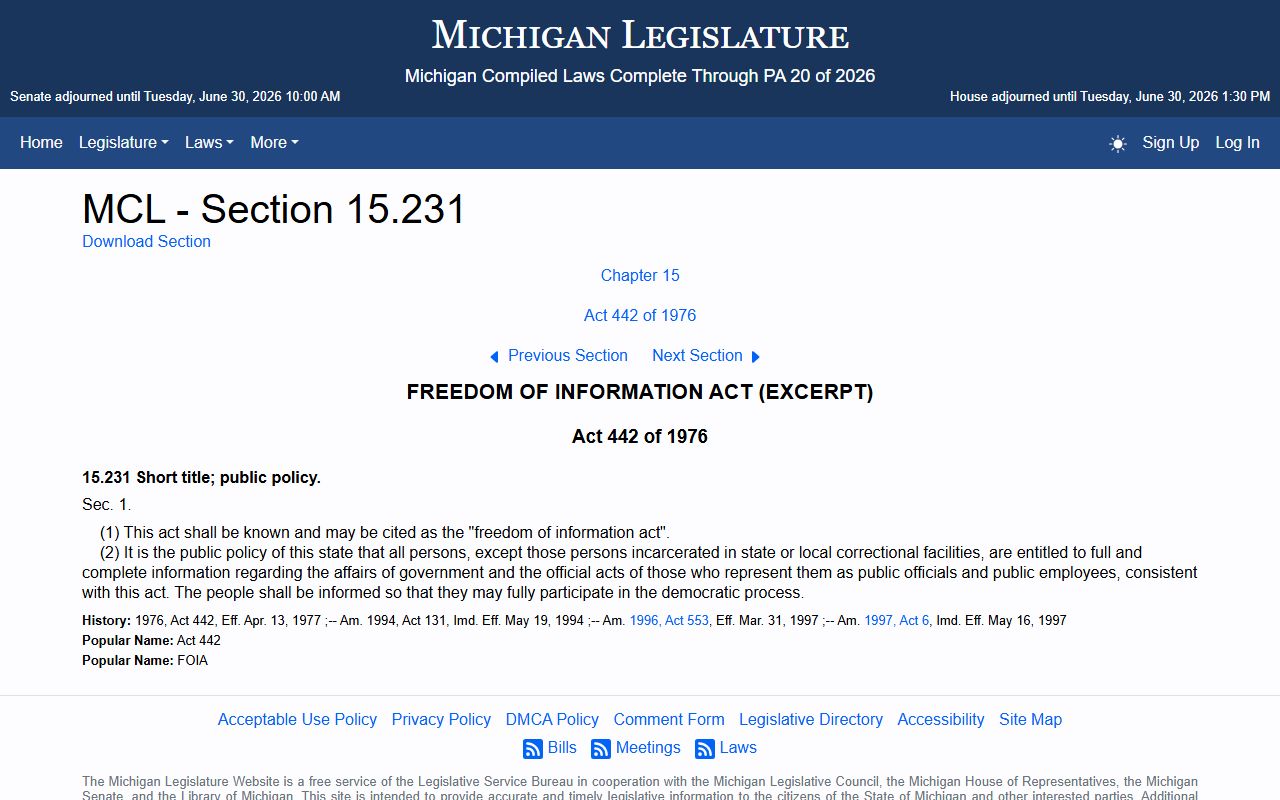
That presumption is the reason most circuit, district, and probate dockets appear in the public search without a special request. A reader usually starts with the case-search portal for live dockets, then turns to the proper clerk for copies or older files. Circuit and district records go through the court clerks, probate files through probate court, and marriage or vital records through the county clerk. If a file is not online, the next step is a records request or a direct office call rather than guesswork.
Note: Court records and confidential court files are not handled under FOIA the same way county administrative records are, so court copies follow the clerk request process instead.
Restricted and Confidential Eaton County Court Records
Some files stay closed even though most court records are open. Juvenile records are limited by law and court rule, adoption files are sealed by design, and certain mental-health and personal-privacy items are public only in part. Public copies also redact sensitive identifiers such as Social Security numbers, financial account numbers, and the names of minors where a rule or statute requires it. Juvenile access sits under MCL 712A.28, which keeps youth cases far more restricted than adult files.
The FOIA exemptions list explains why some documents or lines are withheld even when the rest of a file is open.
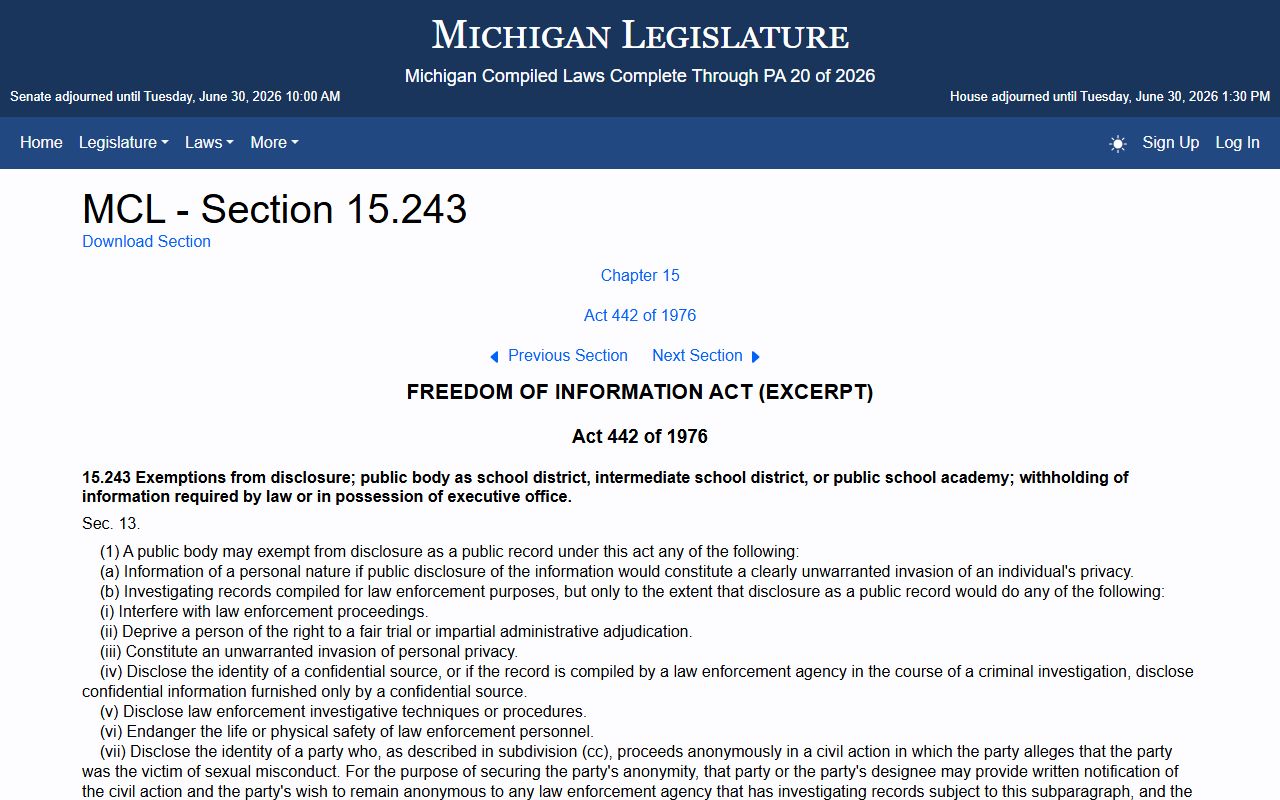
Expungement is the restriction readers ask about most. Under MCL 780.621, a qualifying conviction can be set aside by court order, and the clean-slate statute at MCL 780.621g sets aside some records automatically. A set-aside does not mean the case never happened. It removes the conviction from ordinary public view under the statute, but it does not erase every law-enforcement history. A reader who wants a conviction sealed still has to use the statutory route in circuit court, and the case search will not do it for them.
- Confirm whether the record is adult criminal, juvenile, or something else.
- Check whether it has already been set aside, automatically or by order.
- If not, file the proper set-aside request in circuit court under the statute.
- Notify the prosecutor and any other party the law requires.
- Attend the hearing if one is set, then wait for the judge's decision.
In-Person Eaton County Court Record Requests
When a file is old, thick, or not fully online, a counter visit is often the surest path. The circuit court clerk works out of the county courthouse complex in Charlotte, where the circuit, district, and probate offices cluster in the same building. Bring the case number if you have it, or the full party name and an approximate filing year, plus payment for any copies. The clerk can pull a Register of Actions, print documents, or certify copies while you wait when the file is available.
Eaton County Circuit Court Clerk
1045 Independence Blvd.
Charlotte, MI 48813
517-543-4335
Fax 517-543-4475
Mon-Fri 8:00 a.m. to 5:00 p.m.
Marriage licenses and certified birth, death, and marriage copies are a separate errand handled by the Eaton County clerk of court office rather than the court records counter. Divorce files, by contrast, are circuit court cases and start with the public case search or the circuit clerk, not the vital-records desk.